Procedural generation in video games is a technique that uses algorithms to automatically create game content instead of requiring developers to manually design every element. It can be used to produce terrain, levels, environments, items, textures, quests, and other game systems.
The technique has been used in game development for many years because it can help developers create large amounts of varied content while reducing the amount of repetitive manual work involved.
What Is Procedural Generation in Video Games?
Procedural generation in video games refers to the algorithmic creation of game content. Developers establish rules, parameters, and generation methods, and the computer uses those instructions to produce content.
For example, rather than manually designing every section of a large landscape, developers can create algorithms that determine the height of terrain, placement of objects, environmental features, and other elements.
Procedural generation does not necessarily mean that everything is completely random. In many games, developers combine controlled randomness with specific rules and constraints to make sure the generated content remains playable and visually coherent.
How Procedural Generation Works
A procedural generation system generally begins with a set of rules or algorithms. These rules determine what can be generated and how different elements interact.
A random seed can also be used to control the generation process. A seed allows a system to produce a particular result consistently, meaning the same seed can recreate the same generated environment.
Different algorithms can be used depending on the type of content being created. Noise functions, search-based methods, machine learning techniques, and rule-based approaches are among the methods studied and used for procedural content generation.
What Can Be Procedurally Generated?
Procedural generation can be applied to many different parts of a game.
Terrain and Landscapes
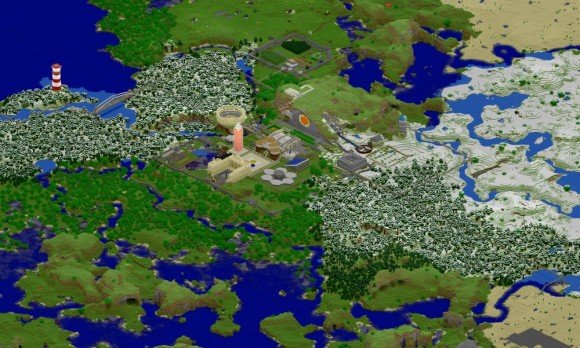
Algorithms can generate mountains, valleys, caves, islands, forests, and other geographical features. Noise-based techniques are commonly associated with terrain and environment generation.
Levels and Dungeons
Procedural systems can create rooms, corridors, obstacles, enemies, and layouts. This approach is particularly useful for games where players repeatedly explore new levels.
Items and Equipment
Games can generate weapons, armor, items, or other objects by combining predefined characteristics according to specific rules.
Vegetation and Objects
Trees, plants, rocks, buildings, roads, and other environmental elements can also be generated algorithmically. Research on procedural virtual worlds covers generation techniques for landscapes, vegetation, buildings, roads, and other objects.
Stories and Scenarios
More advanced procedural systems can generate scenarios, missions, and other higher-level game content. Researchers classify procedural generation across multiple layers of game content, ranging from basic elements to spaces, systems, scenarios, and design.
Why Games Use Procedural Generation
One major advantage is scalability. A procedural system can produce large quantities of content without requiring designers to manually create every individual component.
It can also increase variety and replayability. If a game generates different environments or encounters during each playthrough, players may experience different layouts and challenges.
Procedural generation can therefore be particularly useful for games that depend on exploration, repeated runs, or very large environments.
Challenges of Procedural Generation
Procedural generation also has limitations. A system can generate technically valid content that is nevertheless boring, repetitive, unbalanced, or difficult to navigate.
The challenge is not simply producing content; the generated content also needs to satisfy design constraints and provide interesting experiences for players. This difficulty has been highlighted in academic research on procedural content generation.
Developers therefore often combine procedural techniques with handcrafted content. Human designers can establish important structures and rules while algorithms generate variations within those boundaries.
The Future of Procedural Generation
Procedural generation continues to develop alongside machine learning and other computational techniques. A 2024 survey of procedural content generation discusses traditional approaches such as noise functions and search-based methods alongside machine learning and emerging large language model approaches.
This means future procedural systems may become increasingly capable of generating not only environments and objects but also more complex game scenarios and interactive content.
Conclusion
Procedural generation in video games allows computers to create game content using algorithms, rules, randomness, and other computational techniques. From landscapes and dungeons to objects and scenarios, procedural systems can help developers create large and varied game worlds.
The technique does not replace game design entirely. Instead, it provides developers with tools for producing content at a scale that would be difficult to achieve through manual design alone.