Dynamic difficulty adjustment games use systems that automatically change the level of challenge based on how a player performs. Instead of keeping difficulty completely fixed, these games can make enemies stronger, reduce pressure, provide additional resources, or modify encounters to create a more balanced experience.
What Is Dynamic Difficulty Adjustment?
Dynamic difficulty adjustment, often called DDA, is a game design technique that changes gameplay difficulty while the player is playing. Traditional games usually rely on fixed difficulty levels such as Easy, Normal, and Hard. DDA takes a different approach by allowing the game to respond to the player’s actions.
For example, if a player repeatedly struggles against enemies, the game might reduce enemy strength or provide more useful resources. If the player is progressing unusually easily, the system may increase the challenge.
The objective is generally to keep gameplay engaging without making the player feel overwhelmed or bored.
How Dynamic Difficulty Adjustment Works
A DDA system needs information about the player’s performance. Games can monitor different gameplay factors, including:
- Number of deaths
- Damage received
- Enemy defeat rate
- Player accuracy
- Time required to complete sections
- Health and ammunition usage
- Progress through levels
- Success or failure during encounters
The game can analyze these signals and use predetermined rules or more advanced algorithms to decide when difficulty should change.
Some systems make small adjustments continuously, while others wait until the player reaches certain performance thresholds.
Dynamic Difficulty vs Fixed Difficulty
Fixed difficulty gives players a predictable challenge. Choosing Hard mode, for example, generally means the game follows a predetermined set of rules throughout the experience.
Dynamic difficulty is more flexible. Two players can potentially experience slightly different challenges because the system responds to their individual performance.
This can make games more accessible to players with different skill levels. However, it can also create design challenges because players may not always understand why the game suddenly feels easier or harder.
Examples of Dynamic Difficulty in Games
One frequently discussed example is Resident Evil 4, which uses hidden difficulty-related systems that can respond to player performance. Certain gameplay elements can change depending on how well the player is doing.
Another notable example is Left 4 Dead, which uses the AI Director to manage encounters and pacing. Rather than simply increasing enemy strength, the system can influence when and how threats appear, helping create changing levels of tension during a playthrough.
These approaches demonstrate that dynamic difficulty does not necessarily mean simply giving enemies more health. It can involve controlling encounters, pacing, resources, enemy behavior, and other gameplay elements.
Why Games Use Dynamic Difficulty
One major reason for using DDA is to maintain player engagement.
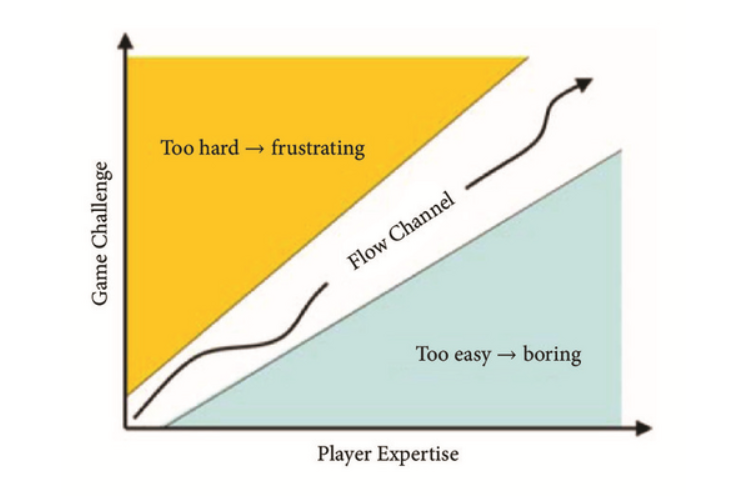
A game that is too easy may fail to provide a meaningful challenge. Players can quickly learn its mechanics and lose interest. On the other hand, a game that is consistently too difficult can cause frustration, particularly when players repeatedly fail the same section.
Dynamic systems attempt to find a middle ground by adjusting the experience according to player performance.
This can be especially useful in games designed for a broad audience, where players may have dramatically different levels of gaming experience.
Benefits of Dynamic Difficulty Adjustment
DDA can provide several potential advantages.
Personalized Challenges
Players do not all have the same skill level. Dynamic systems can adapt the experience instead of expecting every player to handle an identical challenge.
Better Pacing
Difficulty can be adjusted to create periods of intense action followed by moments where players can recover. This approach can make long gameplay sessions feel less repetitive.
Improved Accessibility
Players who struggle with certain mechanics may receive additional assistance without having to manually select an easier difficulty setting.
Replayability
When gameplay responds to player behavior, repeated playthroughs can sometimes feel less predictable.
Problems With Dynamic Difficulty
Despite its advantages, DDA is not perfect.
One major concern is player awareness. If players discover that the game becomes easier after repeated failures, they may feel that their success was not entirely earned.
Another problem is poor implementation. Sudden changes in enemy strength, resource availability, or encounter difficulty can feel artificial.
Developers therefore need to make adjustments carefully. The best systems often operate subtly rather than making dramatic changes that reveal the underlying mechanics.
The Role of Artificial Intelligence
Modern game development has expanded the possibilities for dynamic difficulty adjustment. Artificial intelligence and machine-learning techniques can be used to model player behavior and determine how challenging an experience should be.
Instead of relying entirely on simple rules, an AI-based system could analyze multiple aspects of gameplay and estimate the player’s current ability.
Research into reinforcement learning and player modeling has also explored ways of creating adaptive opponents and environments. These approaches could allow future games to respond more precisely to individual players.
Is Dynamic Difficulty Always Better?
Not necessarily. Dynamic difficulty is a design choice rather than a guaranteed improvement.
Some games benefit from a carefully balanced fixed difficulty because consistent challenges are an important part of their identity. Competitive games, for example, may require standardized conditions so that players can meaningfully compare their performances.
DDA can be particularly useful in single-player experiences where developers want to maintain a specific level of engagement and pacing.
The Future of Dynamic Difficulty
As games become more sophisticated, dynamic difficulty systems may become increasingly personalized. Developers can combine player behavior data, AI techniques, and gameplay analytics to create systems capable of responding to individual play styles.
Future DDA systems could potentially recognize whether a player is struggling with combat, navigation, resource management, or a particular mechanic and adjust the appropriate part of the experience rather than simply lowering overall difficulty.
This could make adaptive game design more precise while keeping the core gameplay intact.
Conclusion
Dynamic difficulty adjustment games demonstrate how modern game design can respond to individual player behavior. By monitoring performance and changing elements such as enemies, resources, encounters, and pacing, DDA systems can create a more flexible gameplay experience.
From hidden difficulty systems to AI-driven encounter management, dynamic adjustment can take many forms. Its success ultimately depends on careful implementation. When used thoughtfully, DDA can help games remain challenging and engaging without forcing every player into exactly the same experience.