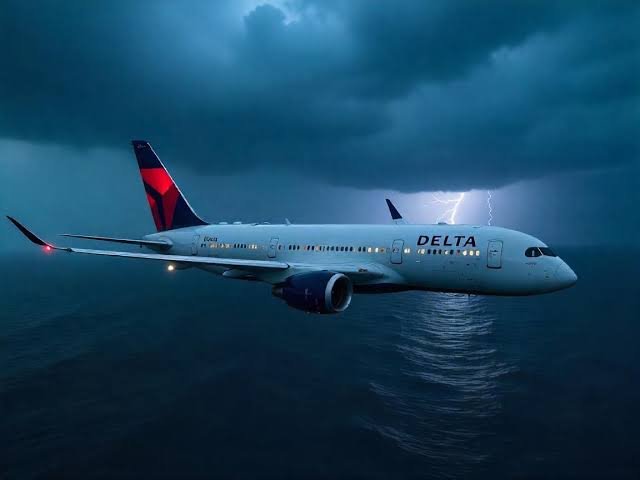
Delta Flight DL275 Japan diversion LAX became a widely searched topic after a Delta Air Lines flight traveling from Detroit Metropolitan Wayne County Airport to Tokyo Haneda International Airport unexpectedly diverted to Los Angeles International Airport (LAX). While flight diversions often generate speculation, this incident highlights how commercial aviation prioritizes passenger safety whenever a potential technical issue arises.
Available reports indicate that the Airbus A350 operating Delta Flight DL275 diverted after the flight crew received an engine anti ice system warning while crossing the North Pacific. Although the exact technical details were not fully disclosed publicly by Delta, the aircraft landed safely at LAX, and no injuries were reported. The diversion demonstrates the aviation industry’s conservative approach to in flight safety. :contentReference[oaicite:0]{index=0}
Overview of Delta Flight DL275 Japan Diversion LAX
Delta Flight DL275 Japan diversion LAX involved a scheduled international service between Detroit (DTW) and Tokyo Haneda (HND). Instead of continuing across the Pacific Ocean, the aircraft changed course and landed at Los Angeles International Airport.
According to publicly available reports, the aircraft involved was an Airbus A350-900, one of Delta’s primary long haul aircraft used on transpacific routes. The flight landed safely after the crew chose to divert as a precaution following a reported engine anti ice system warning. :contentReference[oaicite:1]{index=1}
- Scheduled route from Detroit to Tokyo Haneda.
- Aircraft operated by an Airbus A350-900.
- Diversion made as a safety precaution.
- Flight landed safely at Los Angeles International Airport.
- No injuries were publicly reported.
- Passengers were later assisted with onward travel.
Why Was Delta Flight DL275 Diverted to LAX?
Public reporting consistently points to a reported engine anti ice system warning as the reason for the diversion. Although an anti ice warning does not necessarily indicate immediate engine failure, aircraft systems designed for extended overwater operations require conservative decision making.
On long transpacific flights, pilots evaluate technical alerts carefully because suitable diversion airports become limited once the aircraft is farther from land. Choosing to divert early reduces operational risk and follows established airline safety procedures. The reported technical issue has not been fully detailed in an official public technical report, so it is best described as a reported or widely cited cause rather than a formally confirmed finding. :contentReference[oaicite:2]{index=2}
Why Los Angeles Was Selected Instead of Other Airports
Some travelers wondered why the aircraft continued to Los Angeles instead of diverting to a closer airport. Airline operations teams evaluate many factors before selecting a diversion airport.
- Availability of qualified maintenance personnel.
- Facilities capable of handling wide body aircraft.
- Passenger rebooking opportunities.
- Availability of replacement crews.
- Operational support from a major Delta hub.
- Ground services for international travelers.
LAX offers extensive maintenance capabilities, international passenger processing, and significant Delta operations, making it a practical diversion airport for many long haul flights. :contentReference[oaicite:3]{index=3}
How Flight Crews Handle Technical Warnings
Commercial airline pilots receive extensive training to respond to abnormal aircraft system indications. Modern aircraft continuously monitor thousands of system parameters and alert crews whenever a component requires attention.
When a warning appears, pilots work through standardized checklists while communicating with airline operations and air traffic control. Their objective is always to maintain the highest possible safety margin.
- Evaluate aircraft system messages.
- Consult operational checklists.
- Coordinate with dispatch personnel.
- Communicate with air traffic control.
- Select the safest diversion airport if necessary.
- Keep passengers informed whenever possible.
Passenger Experience During the Diversion
Although diversions can be frustrating, airlines prioritize passenger safety above maintaining the original schedule. After landing, passengers typically receive assistance with rebooking, accommodations when required, and updated travel arrangements.
The exact assistance offered varies depending on operational circumstances, crew availability, airport facilities, and airline policies.
Modern Aircraft Safety Systems
The Airbus A350 is equipped with advanced monitoring systems that continuously evaluate engine performance and numerous onboard components. These technologies allow crews to identify potential issues early, often before they become serious operational concerns.
Commercial aviation safety is built upon multiple independent layers that include sophisticated aircraft systems, trained flight crews, maintenance personnel, dispatch centers, and regulatory oversight.
Why Flight Diversions Are Sometimes Necessary
Flight diversions occur for many reasons and should not automatically be interpreted as emergencies. In many cases, they represent precautionary decisions made before a situation becomes more complicated.
- Mechanical or system warnings.
- Medical emergencies.
- Severe weather.
- Airport operational issues.
- Air traffic restrictions.
- Security related concerns.
Most diversions conclude safely because airlines and flight crews follow well established procedures designed to minimize risk.
Lessons from Delta Flight DL275 Japan Diversion LAX
The incident demonstrates how conservative decision making contributes to commercial aviation’s strong safety record. Rather than continuing across the Pacific after receiving a reported technical warning, the crew chose a diversion airport capable of supporting both the aircraft and its passengers.
This proactive approach reflects standard airline operating philosophy, where caution takes precedence over schedule reliability whenever technical questions arise.
Where to Find Official Flight Information
Passengers seeking current flight status, travel advisories, or customer assistance should rely on official airline resources. Delta provides flight updates, travel notifications, and customer support through its official website.
Additional aviation safety information is available from the Federal Aviation Administration, which provides educational resources about commercial aviation operations.
Conclusion
Delta Flight DL275 Japan diversion LAX illustrates how modern commercial aviation emphasizes precaution and safety whenever a potential technical issue arises. Publicly available information indicates the Detroit to Tokyo flight diverted to Los Angeles after a reported engine anti ice system warning, allowing the aircraft to land safely without reported injuries. Although the diversion disrupted travel plans, it demonstrated the effectiveness of established aviation safety procedures. Understanding the circumstances behind Delta Flight DL275 Japan diversion LAX helps travelers appreciate the careful decision making that protects passengers on long haul international flights. :contentReference[oaicite:4]{index=4}