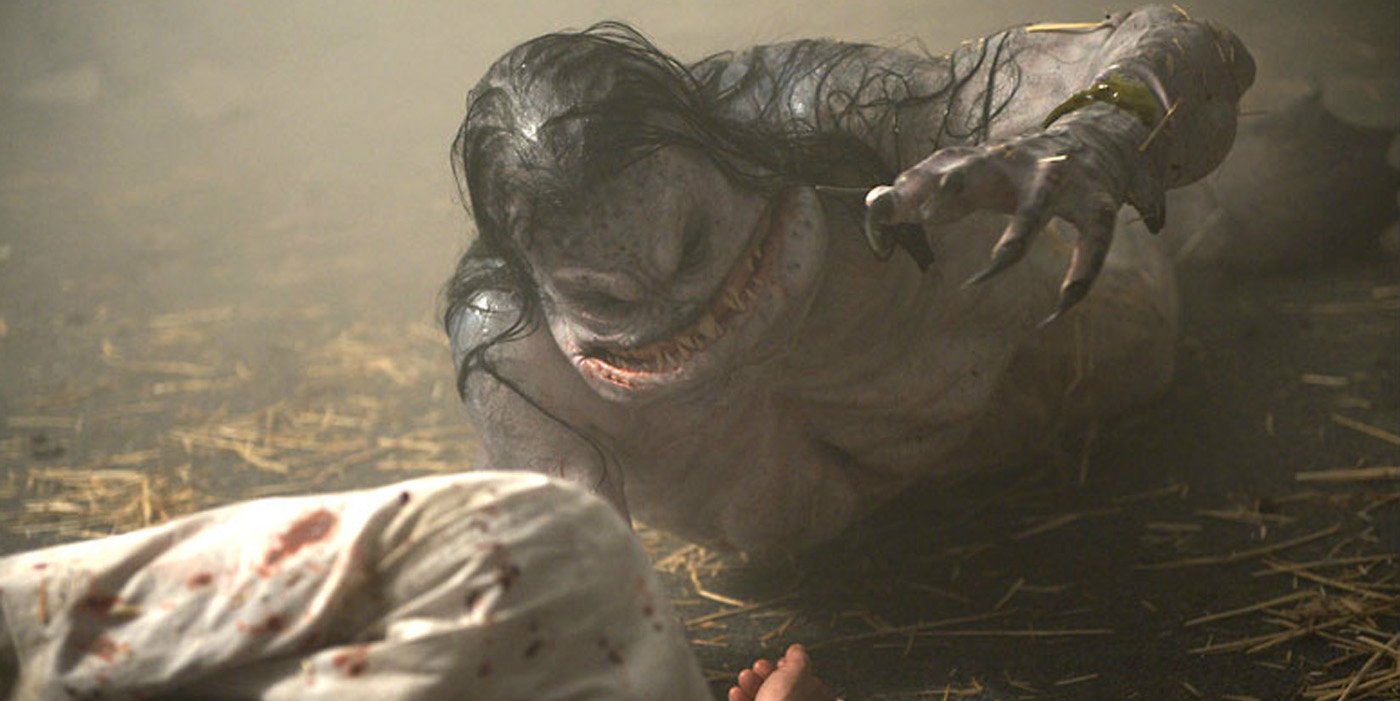
Practical effects in horror movies have played an important role in making frightening scenes feel physical, immediate, and believable. Instead of creating everything digitally after filming, practical effects use real objects, makeup, puppets, mechanical devices, miniatures, fake blood, prosthetics, and other physical materials directly on set.
The Academy of Motion Picture Arts and Sciences describes physical effects as techniques involving elements such as rain, fire, smoke, explosions, animatronics, prosthetic makeup, mechanical creatures, and stunt work. These effects are created physically in front of the camera rather than being produced entirely through computer-generated imagery.
Horror has traditionally been one of the genres where these techniques can have a particularly strong impact. A creature that physically exists in front of an actor can interact with the environment, cast shadows, occupy real space, and produce textures that cameras can capture naturally.
What Are Practical Effects?
Practical effects are physical techniques used during filming to create an effect that the audience will eventually see on screen. They can range from simple fake wounds to extremely complicated mechanical monsters.
Some common examples include:
- Prosthetic wounds and injuries
- Fake blood and gore
- Creature costumes
- Animatronics
- Mechanical puppets
- Latex or silicone monsters
- Miniature sets
- Physical destruction
- Smoke and atmospheric effects
- Makeup transformations
- Mechanical rigs
- Puppetry
Practical effects do not necessarily mean that a movie contains no digital effects. Modern productions often combine physical effects with CGI and digital compositing. This combination allows filmmakers to capture the physical detail of practical creations while using digital tools for elements that would be difficult or dangerous to create physically.
Why Horror Movies Use Practical Effects
One major advantage of practical effects is physical presence. When an actor is interacting with a real creature, prop, or prosthetic, the performance can develop around something that actually exists on the set.
Director David Gordon Green discussed this approach while making The Exorcist: Believer, explaining that the production wanted to use practical effects and old-school techniques because they helped create a tangible world.
This can be especially useful in horror. Fear often depends on details that feel real enough to make viewers uncomfortable. A practical wound has physical texture. A mechanical creature can move through the same lighting as the actors. Fake blood can splash onto costumes and surfaces naturally.
These details can make a scene feel less like an artificial visual effect and more like something that actually happened inside the movie’s world.
Prosthetic Makeup and Creature Design
Prosthetic makeup is one of the most recognizable forms of practical effects in horror.
Artists can transform actors using foam latex, silicone, adhesives, sculpted appliances, artificial teeth, contact lenses, wigs, body pieces, and paint. These materials can create aging, injuries, mutations, monsters, zombies, vampires, werewolves, and other supernatural characters.
The Academy notes that special-effects makeup can involve blood, knife wounds, bullet wounds, deformities, monsters, and otherworldly beings. Animatronic components can also be incorporated into makeup designs to produce movement.
A famous example is An American Werewolf in London (1981). Makeup artist Rick Baker created its werewolf transformation effects, and the work earned him the first competitive Academy Award for Makeup when the category was introduced in 1982.
The transformation scene demonstrates why practical makeup became so influential in horror. Instead of simply showing a completed monster, filmmakers could make the audience watch the physical transformation happen.
Animatronics in Horror
Animatronics use mechanical systems to make physical creatures, puppets, or props move.
Depending on the design, motors, cables, hydraulics, electronics, or other mechanical components can control facial movements, limbs, eyes, mouths, or entire bodies. The Academy describes animatronics as mechanical systems that can produce lifelike performances from puppets or models.
For horror filmmakers, animatronics can be useful when a creature needs to interact directly with actors.
A monster can stand in a room, move toward a character, open its mouth, or physically manipulate an object. Even when the audience does not know how the effect was created, the physical interaction can contribute to the realism of the scene.
The Importance of The Thing
John Carpenter’s The Thing (1982) is one of the most famous examples of practical effects in horror movies.
The film features a shape-shifting alien capable of imitating living organisms. BFI describes the movie as a landmark for special makeup effects and highlights Rob Bottin’s extensive creature work.
The creatures in The Thing use a combination of puppetry, prosthetics, mechanical effects, makeup, and other physical techniques. The result is a collection of bizarre transformations that remain memorable decades after the film’s release.
The importance of the effects comes partly from their unpredictability. The creatures do not simply look like conventional monsters. Bodies stretch, open, mutate, and transform in disturbing ways.
The film demonstrates how practical effects can support horror by making physical transformation a central part of the experience.
Practical Blood and Gore
Fake blood is another classic technique used in horror movies.
Filmmakers have used different mixtures and materials to simulate blood depending on the scene. The required consistency can vary because blood that looks convincing on skin may not behave the same way when sprayed, poured, or thrown across a room.
Low-budget productions have also found creative ways to create convincing gore without expensive equipment.
BFI’s discussion of The Evil Dead (1981), for example, notes that the production used large quantities of fake blood made with corn syrup. The film became particularly well known for its DIY approach to effects.
Practical gore can also interact naturally with costumes, walls, floors, and props. Once blood is physically present on the set, lighting and camera movement can capture it without requiring every detail to be generated digitally.
DIY Practical Effects
Practical effects are not limited to major Hollywood productions.
Independent horror filmmakers have frequently relied on creativity, inexpensive materials, homemade props, masks, puppets, and basic makeup techniques.
The Evil Dead is a notable example. BFI describes it as a major example of DIY effects, highlighting techniques such as thick contact lenses, stop-motion animation, homemade camera solutions, and large quantities of fake blood.
This approach demonstrates an important feature of practical effects: imagination can sometimes compensate for a limited budget.
A filmmaker does not always need an expensive digital-effects department to create an effective monster. A carefully designed mask, clever lighting, forced perspective, or physical prop can sometimes achieve the desired result.
Puppetry and Physical Monsters
Puppetry has been used in genre cinema for more than a century. BFI’s 2026 overview of monster puppetry traces the use of marionettes, hand puppets, and other practical puppet techniques across decades of filmmaking.
Horror filmmakers can use puppetry to create creatures that would otherwise be difficult to portray with a human actor.
A puppet can have unusual proportions, multiple limbs, exaggerated facial features, or movements that are impossible for a normal performer. With careful lighting and camera positioning, the puppeteer can also be hidden from view.
Miniatures and Forced Perspective
Not every practical effect involves a monster or makeup.
Miniatures can be used to create buildings, environments, vehicles, or destruction on a smaller scale. The Academy notes that a building appearing to be destroyed by an explosion could actually be represented by a miniature model.
Horror filmmakers can use miniatures to create abandoned buildings, isolated locations, destroyed environments, or other large-scale scenes without constructing everything at full size.
Forced perspective can also make an object or creature appear much larger or smaller than it really is. By carefully positioning actors, props, and cameras, filmmakers can manipulate the audience’s perception of scale.
Practical Effects and CGI Can Work Together
The idea that practical effects and CGI must compete with each other is misleading. Many modern productions use both.
A physical creature may be filmed on set while CGI is used to remove support equipment, enhance movement, add environmental elements, or complete shots that cannot be achieved practically.
BFI has noted that practical effects and computer-generated imagery can complement one another, with filmmakers choosing digital techniques when movement or stunt integration makes purely practical methods difficult.
This hybrid approach can give filmmakers greater control.
For example, a creature’s body may be a physical costume or puppet, while digital effects enhance its eyes or remove visible wires. A practical prosthetic may provide the basic appearance while CGI adds subtle movement.
Why Practical Effects Still Matter
Digital effects have transformed filmmaking, but practical effects remain valuable because they provide something physical for actors and cameras to interact with.
They also create natural imperfections.
Real materials wrinkle, reflect light, cast shadows, absorb liquid, and respond to movement. These small details can contribute to the visual texture of a horror scene.
Practical effects can also influence how filmmakers shoot a scene. When a real creature or physical prop is present, actors can react to something directly rather than imagining an object that will be added later.
The Future of Practical Effects in Horror
Practical effects are unlikely to disappear completely from horror filmmaking. Instead, they are increasingly being combined with digital techniques.
Modern filmmakers can choose the most appropriate method for each shot. A physical prosthetic may be ideal for a close-up, while CGI may be better for a creature performing an impossible movement.
The continued interest in practical effects also reflects their artistic value. Films such as The Thing, An American Werewolf in London, and The Evil Dead demonstrate how physical effects can become an important part of a movie’s identity.
Final Thoughts
Practical effects in horror movies remain an important filmmaking technique because they bring physical materials, creatures, makeup, blood, puppets, and mechanical effects directly into the filmmaking process.
From homemade effects in independent productions to sophisticated animatronics and prosthetic transformations in major films, practical techniques have helped horror filmmakers create memorable imagery for generations.
Rather than simply replacing practical effects with CGI, many modern productions combine both approaches. The physical realism of practical effects and the flexibility of digital technology can work together to create horror scenes that are visually convincing and creatively ambitious.