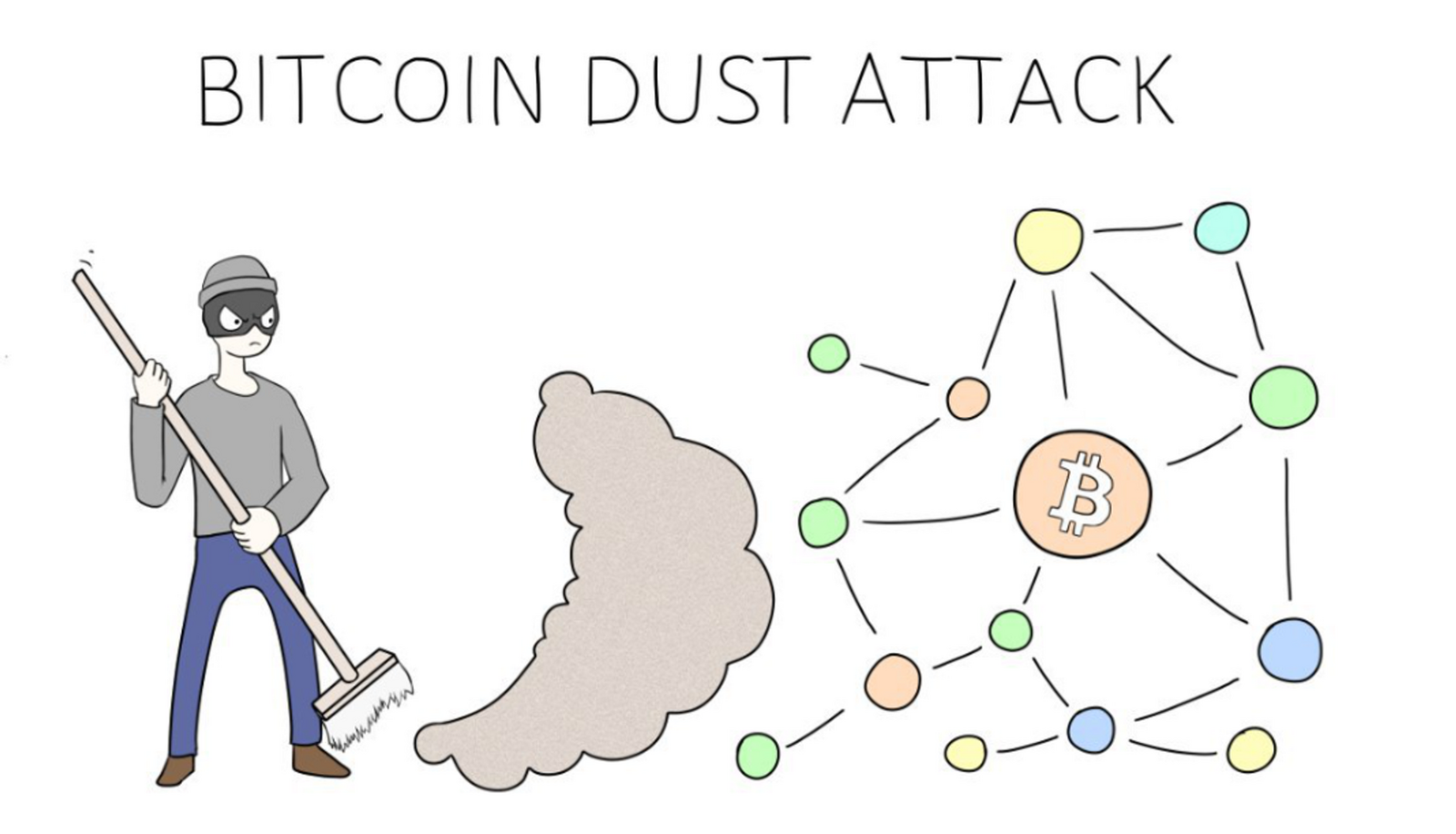
A crypto dust attack is a blockchain privacy technique in which an attacker sends extremely small amounts of cryptocurrency to many wallet addresses and then monitors how those funds move. The goal is generally not to steal cryptocurrency directly but to analyze transaction activity and potentially connect different wallet addresses to the same person or organization.
Because public blockchains make transaction histories visible, attackers can use small deposits as a way to study wallet behavior. Understanding how dust attacks work can help cryptocurrency users recognize suspicious transactions and protect their financial privacy.
What Is a Crypto Dust Attack?
A crypto dust attack happens when an attacker distributes tiny amounts of cryptocurrency, commonly called dust, to multiple wallets. The attacker then watches those funds on the blockchain.
The term “dust” refers to a very small cryptocurrency amount. The exact meaning varies between blockchain networks, transaction types, and fee conditions. In Bitcoin, for example, dust can refer to an output so small that spending it may be uneconomical because transaction fees could exceed its value.
The attacker uses these tiny amounts as markers. If a recipient later spends the dust together with other funds, blockchain analysis may reveal relationships between the wallet’s different transaction inputs.
The important point is that receiving dust does not normally give an attacker access to your private keys, seed phrase, or entire wallet.
How Does a Crypto Dust Attack Work?
A typical crypto dust attack can be broken into several stages.
1. The Attacker Finds Wallet Addresses
The attacker first identifies publicly visible cryptocurrency addresses. These can come from blockchain activity, public websites, donation pages, exchanges, forums, or other sources.
Because many blockchains are transparent, addresses and transactions can be observed without knowing the owner’s real name.
2. Tiny Amounts Are Sent
The attacker sends a very small amount of cryptocurrency to selected addresses.
For example, an attacker might distribute tiny Bitcoin amounts across hundreds or thousands of addresses. The value of each transaction can be extremely small compared with ordinary cryptocurrency transfers.
The objective is to make the deposits look insignificant while creating trackable blockchain activity.
3. The Attacker Watches the Wallet
Once the dust reaches its destinations, the attacker monitors subsequent transactions.
They may look for situations where the dust is spent together with other UTXOs belonging to the same wallet.
4. Transactions Are Analyzed
On a UTXO-based blockchain such as Bitcoin, a transaction can contain multiple inputs. When several UTXOs are used together, blockchain analysts may be able to infer that they are controlled by the same entity.
If the suspicious dust becomes one of those inputs, it can provide an additional connection between addresses.
5. Wallet Relationships May Be Identified
Over time, repeated transaction patterns can potentially help an attacker or blockchain-analysis company build clusters of addresses that appear to belong to the same user or organization.
This is where the privacy risk comes from.
Why Are Crypto Dust Attacks Used?
The main objective of a traditional dust attack is blockchain analysis and privacy reduction.
Cryptocurrency addresses are generally pseudonymous. An address doesn’t automatically display the owner’s name, home address, or other personal information.
However, pseudonymous does not mean completely anonymous.
If an address becomes connected to an identifiable cryptocurrency exchange account, business, website, or other real-world information, blockchain activity associated with that address may become easier to analyze.
Dust can therefore be used as one small piece of information in a larger transaction-analysis process.
Crypto Dust Attack vs. Crypto Theft
A dust attack is different from a traditional wallet theft.
In a typical theft scenario, an attacker might try to obtain someone’s private key, seed phrase, password, or authentication credentials and then move the victim’s funds.
A dust attack generally works differently.
The attacker sends cryptocurrency to the wallet rather than taking cryptocurrency from it.
Receiving the dust itself normally does not allow the attacker to control the wallet. The main concern is what happens afterward, particularly if the suspicious amount is combined with other funds.
This distinction is important because seeing a tiny unexpected transaction does not necessarily mean your wallet has been hacked.
What Are UTXOs and Why Do They Matter?
To understand Bitcoin dust attacks, it helps to understand UTXOs, or Unspent Transaction Outputs.
Bitcoin doesn’t store your balance in exactly the same way a traditional bank account does. Instead, your wallet controls individual unspent transaction outputs.
Imagine that a wallet has three UTXOs:
- 0.005 BTC
- 0.015 BTC
- 0.000001 BTC of unexpected dust
If a wallet later selects all three as inputs for a transaction, the dust has been combined with the other UTXOs.
Because Bitcoin transactions are publicly visible, an observer can see that these inputs were used together.
This doesn’t automatically prove that every address involved belongs to the same person, but it can provide useful information for blockchain analysis.
Can a Dust Attack Steal Your Cryptocurrency?
A normal dust attack does not give the attacker your private keys.
Simply receiving a tiny amount of Bitcoin does not normally grant the sender permission to spend the rest of your wallet.
However, users should still be cautious with unexpected cryptocurrency deposits because dusting can sometimes be combined with other forms of scams.
For example, an unexpected token might contain a name, message, or other information designed to make the recipient visit a website. A malicious website could then attempt to trick the user into connecting a wallet, signing a transaction, or entering sensitive information.
Therefore, the danger may come from the interaction that follows the suspicious deposit, rather than from the dust itself.
What Does a Dust Attack Look Like?
A dust attack can be difficult to recognize because the transaction may look like an ordinary small cryptocurrency payment.
Some warning signs include:
- An unexpected extremely small deposit
- Multiple tiny deposits appearing over time
- Unknown tokens appearing in a wallet
- Suspicious transaction descriptions or token names
- Messages attached to unexpected token transfers
- Requests to visit unfamiliar websites
- Requests to connect your wallet after receiving a token
Not every small transaction is malicious. People can accidentally send tiny amounts, and some legitimate blockchain activity can create small UTXOs.
The presence of dust alone is therefore not proof of an attack.
What Should You Do If You Receive Crypto Dust?
If you notice an unexpected tiny deposit, the safest approach is generally to avoid unnecessary interaction with it.
Don’t Spend Suspicious Dust
If your wallet provides coin-control functionality, you may be able to prevent a particular UTXO from being selected for future transactions.
This can be useful when you want to keep suspicious funds separate from your normal cryptocurrency.
Don’t Click Suspicious Links
Some suspicious token transfers are designed to encourage users to interact with external websites.
Avoid clicking links contained in unexpected transaction messages, token names, or descriptions.
Never Share Your Seed Phrase
Your recovery phrase is one of the most important security elements of a cryptocurrency wallet.
A legitimate person or service should not need your seed phrase to help you deal with an unexpected dust transaction.
Never enter your seed phrase into an unfamiliar website.
Use Coin Control When Available
Some cryptocurrency wallets allow users to manually select which UTXOs are spent.
Coin control can help users avoid accidentally combining suspicious dust with other funds.
The exact process depends on the wallet software and blockchain being used.
Can Dust Attacks Affect Ethereum?
The concept of dusting is most closely associated with UTXO-based cryptocurrencies such as Bitcoin, but tiny unsolicited transactions can also appear on account-based networks such as Ethereum.
The mechanics are different because Ethereum doesn’t use Bitcoin’s UTXO model.
Instead, Ethereum uses account balances and transaction histories. An attacker may send a tiny amount of ETH or an unsolicited token and attempt to get the recipient to interact with a malicious contract or website.
This means users should distinguish between a traditional UTXO dust attack and broader unsolicited-token scams that use tiny transfers as bait.
Are All Tiny Crypto Transactions Attacks?
No.
A tiny cryptocurrency transaction does not automatically mean that someone is attacking your wallet.
Small balances can result from:
- Transaction change
- Failed or abandoned transactions
- Exchange withdrawals
- Testing transactions
- Normal wallet activity
- Blockchain applications
- Promotional distributions
- Accidental transfers
The context matters.
Users should avoid assuming that every tiny transaction represents malicious activity.
How Can Businesses Protect Their Wallet Privacy?
Businesses that regularly receive cryptocurrency payments may have additional privacy considerations.
They can consider using separate addresses for different purposes, maintaining appropriate transaction records, limiting unnecessary address reuse, and using wallet software with advanced transaction-management features.
Organizations should also monitor unexpected transactions and establish internal procedures for handling suspicious assets.
Good wallet hygiene can reduce the amount of information accidentally exposed through blockchain activity.
Does Receiving Dust Mean Your Wallet Is Compromised?
Usually, no.
Receiving an unsolicited tiny cryptocurrency transaction does not normally mean that your private key has been exposed.
A blockchain address can receive funds from anyone. The sender doesn’t need permission from the recipient to make the transaction.
The more important question is what happens afterward.
If you don’t interact with suspicious assets, don’t reveal private information, and don’t approve malicious transactions, the presence of an unexpected tiny deposit by itself generally isn’t equivalent to a wallet compromise.
Crypto Dust Attack Explained in Simple Terms
The simplest way to understand a crypto dust attack is to imagine someone secretly placing a tiny tracking marker into many different boxes.
They aren’t necessarily trying to steal the boxes. Instead, they want to see which boxes are later handled together.
In cryptocurrency, the blockchain provides a public record of transactions. An attacker can place tiny amounts into addresses and then watch whether those amounts move alongside other funds.
On UTXO-based networks, this can potentially provide clues about relationships between addresses.
That’s why dust attacks are primarily associated with privacy and transaction analysis.
Final Thoughts
A crypto dust attack uses tiny cryptocurrency transfers to potentially gather information about wallet activity. The attacker sends small amounts to addresses and monitors subsequent transactions, particularly when the dust is combined with other funds.
The attack generally does not give the sender direct control over the recipient’s wallet. Instead, its primary purpose is to exploit the transparency of public blockchain transactions and potentially reduce financial privacy.
If you receive unexpected crypto dust, don’t panic. Avoid spending suspicious UTXOs when possible, don’t interact with unknown tokens or websites, and never provide your seed phrase or private keys.
Understanding how blockchain transactions work is one of the most effective ways to recognize suspicious activity and protect your cryptocurrency privacy