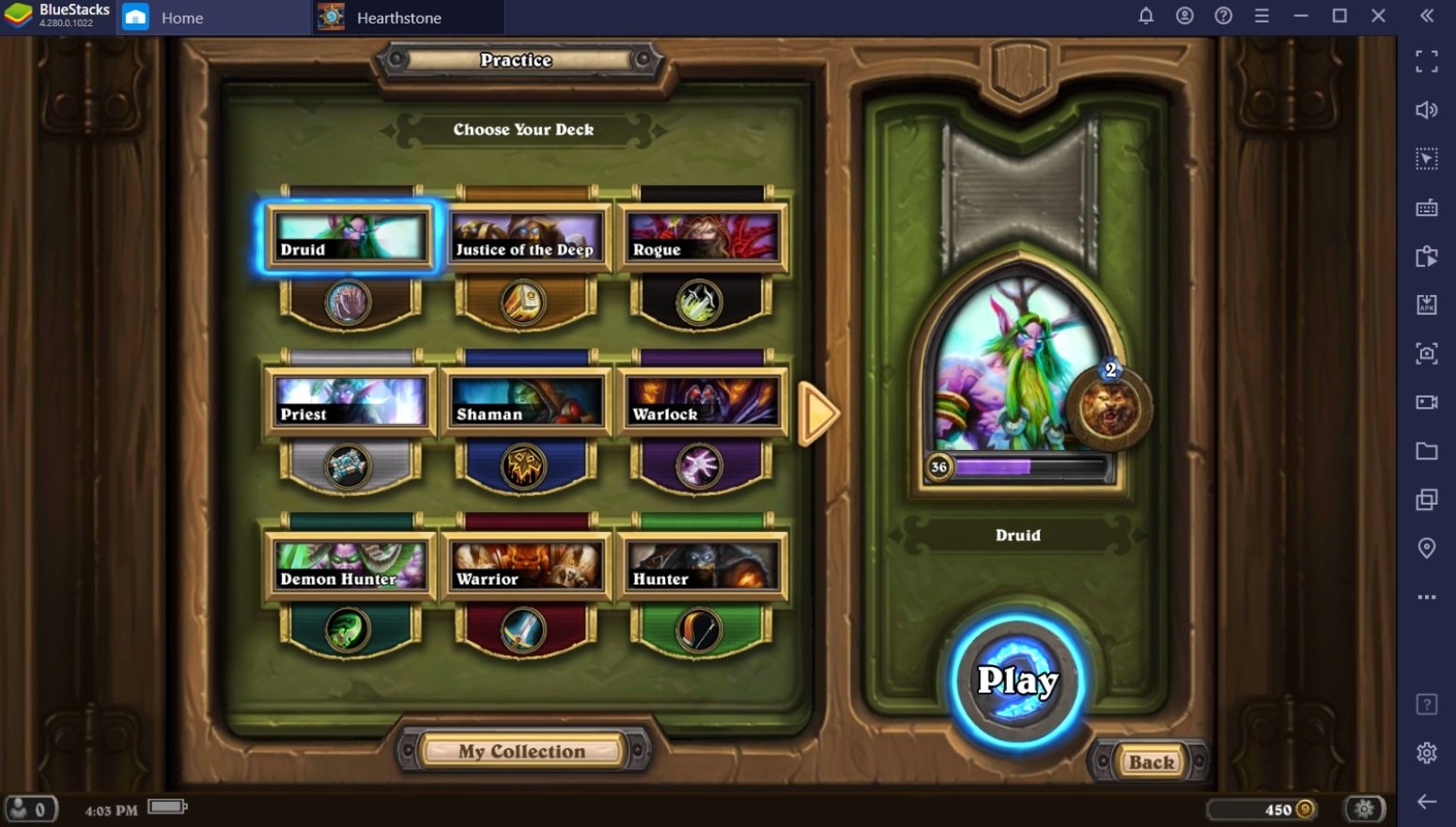
Choosing a free deck in Hearthstone can make a major difference when we are starting over or returning after a long break. In 2026, Blizzard has continued using Ladder Ready Decks to give eligible players a competitive starting point, while the Standard format continues to evolve with new expansions and balance changes. For players searching for HearthStats Interesting New information, the most useful approach is to combine current official Hearthstone guidance with deck testing and collection planning rather than simply choosing the class with the highest reputation.
Blizzard’s March 2026 returning player guide confirms that eligible players can try several Ladder Ready Decks before selecting one to keep. Players have seven days to test the available choices, making the decision considerably easier than it was when players had to commit immediately.
Which Free Deck Should We Choose in Hearthstone 2026?
There is no permanently best free deck because Hearthstone’s Standard environment changes whenever new cards, balance adjustments, or rotations reshape the metagame. The better question is which free deck gives us the strongest combination of immediate playability, useful cards, enjoyable gameplay, and long term collection value.
For most new or returning players, we recommend choosing a deck that meets three conditions. First, it should be capable of competing in Standard without requiring immediate crafting. Second, its cards should provide a useful foundation for future decks. Third, we should actually enjoy playing its archetype because learning one deck deeply is usually more productive than constantly switching between classes.
Why the Free Ladder Ready Deck Matters
Hearthstone’s Ladder Ready Deck system is designed to reduce the barrier to entering Ranked play. Blizzard describes these decks as being built to compete immediately, rather than simply serving as beginner practice lists. The system has also been updated over time to reflect newer card sets.
For new players, this matters because building a competitive Standard deck from scratch can require a substantial investment of Arcane Dust. A free prebuilt deck gives us an opportunity to play first and spend resources later.
- We receive a ready to play Standard deck.
- We can test available options before making the final choice.
- We can avoid spending Dust on a complete deck immediately.
- We gain cards that may become useful in future deck builds.
- We can begin learning Ranked fundamentals sooner.
How to Pick the Best Free Deck for Your Playstyle
Aggressive Players Should Prioritize Tempo
If we prefer short games and proactive turns, an aggressive or tempo focused deck is generally the easiest starting point. These decks emphasize early board development, efficient trades, and pressure on the opposing hero.
The major advantage is that the game plan is relatively straightforward. We can focus on developing the board, recognizing favorable trades, and understanding when to switch from board control to direct damage.
Midrange Players Need Flexibility
Midrange decks are often attractive for players who want a balance between aggression and resource management. They can pressure slower opponents while still having tools for longer games.
This makes a flexible midrange style particularly appealing when we do not yet know which type of Hearthstone deck we enjoy most.
Control Players Should Consider Long Term Value
Control strategies can be more demanding for beginners because they require matchup knowledge, resource management, and careful planning. However, players who enjoy slower games may find them more rewarding.
We should not choose a control deck simply because its card collection looks valuable. If the strategy does not match our preferred style, the free cards may sit unused.
Do Not Choose a Deck Based Only on Dust Value
One of the most common mistakes is selecting the free deck containing the highest theoretical Arcane Dust value. While collection value matters, it should not be the only consideration.
A deck containing several expensive Legendary cards may look attractive, but those cards have limited value if we never intend to play that class. A slightly cheaper deck that provides cards for multiple future builds can ultimately be more useful.
- Check how many cards we already own.
- Identify which Legendary cards are exclusive to the deck.
- Consider whether we enjoy the class.
- Look at how easily the deck can be upgraded.
- Think about which future decks we may want to build.
Use the Trial Period Before Making the Final Choice
The seven day trial period is arguably the most useful part of the current system. Blizzard specifically recommends trying the available Ladder Ready Decks before selecting one to keep.
We should use those seven days strategically rather than playing one casual match with each option. Several games per deck can reveal whether we understand its mulligan strategy, resource management, win condition, and common matchups.
A Simple Testing Method
- Play several games with every available deck.
- Record which deck feels easiest to understand.
- Notice which cards we repeatedly wish we had.
- Evaluate whether the win condition feels natural.
- Check which deck we would actually continue playing.
This process is more reliable than copying a tier list because a deck’s theoretical strength does not automatically translate into individual performance.
What New Players Should Know About Standard in 2026
Standard remains the best starting point for players who want the current Hearthstone experience. Blizzard describes Standard as using the most recent card sets, while Wild allows players to use a much broader collection.
This distinction is important when evaluating a free deck. We should prioritize cards that belong to the current Standard environment and understand that the value of older cards can change after rotation.
We should also avoid assuming that every card included in a prebuilt deck becomes a permanent part of our collection. Core cards and collectible cards can behave differently when the yearly rotation occurs, and Blizzard forum discussions have specifically addressed confusion around cards that leave the Core set.
How HearthStats Interesting New Information Can Help
The phrase HearthStats Interesting New appears in online content discussing HearthStats, Hearthstone statistics, new features, and gaming trends. However, third party articles should be treated as supplementary resources rather than official Blizzard documentation.
Statistics can still be valuable when used correctly. Win rates, matchup records, deck popularity, and card performance can help us identify patterns. However, we should always consider sample size, rank distribution, date ranges, and balance changes before treating statistics as definitive.
Do We Need a Deck Tracker?
A deck tracker can be useful for players who want to improve beyond simply winning games. Tracking our performance can reveal whether losses are concentrated against particular archetypes or whether we consistently struggle with specific stages of a match.
However, new players should not feel obligated to install additional software. Learning fundamental Hearthstone skills should come first.
- Learn the mulligan for the deck.
- Understand the primary win condition.
- Track opposing resources and likely threats.
- Study common matchup patterns.
- Review important mistakes after losses.
Free Cards and Catch Up Rewards in 2026
The free deck is only one part of Blizzard’s current approach to helping returning players rebuild their collections. Eligible returning players can also receive Catch Up Packs, which are designed to provide cards from past expansions based partly on collection size. Blizzard advises opening these packs before other packs to maximize their potential value.
In March 2026, Blizzard also offered temporary access to cards from Into the Emerald Dream and The Lost City of Un’Goro through Dream City Trial Cards during the CATACLYSM period. This gave returning players another way to experiment with Standard strategies before committing resources.
Our Final Recommendation for Choosing a Free Deck
If we are completely new to Hearthstone, we should choose the free deck whose gameplay is easiest for us to understand and whose class we genuinely enjoy. If we are returning players, we should compare the deck against our existing collection and prioritize cards that fill gaps in our account.
We should also remember that the strongest choice can change after a balance patch or expansion. Hearthstone is a living competitive game, so a deck that looks exceptional today may be less attractive later.
For official information about current game systems, expansions, and updates, we recommend checking Blizzard’s Hearthstone news and patch notes alongside community statistics.
Conclusion
When deciding which free deck to choose in Hearthstone 2026, we should prioritize practical value over hype. The best choice is the deck we can understand, enjoy, and continue developing after the free period ends. The current Ladder Ready system gives eligible players time to test multiple options, making it easier to make an informed decision. For readers following HearthStats Interesting New updates, statistics and community analysis can provide useful context, but official Blizzard information should remain the foundation for decisions about current Hearthstone decks.